

HearUSA's Dr. Jorge Rey warns World Cup fans to be vigilant about hearing loss
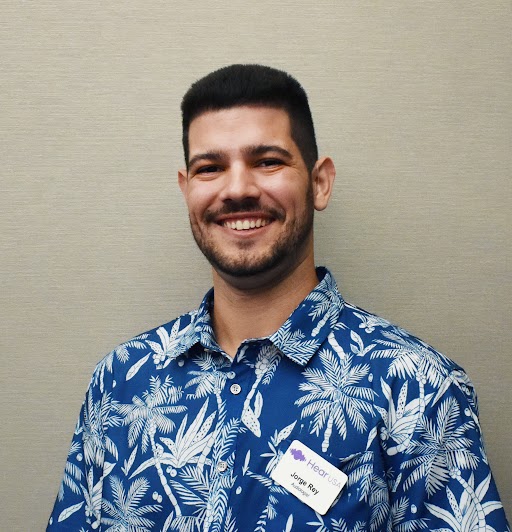
Dr. Jorge Rey of HearUSA gives some good tips to keep your hearing protected at the upcoming NCAA Tournament
The Invisible Threat in the Stadium Stands: Dr. Rey Gives His Advice for World Cup Fans
For every 3-decibel increase in the sound, you have to cut that time of exposure in half. We know these events can reach up to 100 dB. Even 15 minutes in that is already causing long term damage.”
MIAMI, FL, UNITED STATES, June 11, 2026 /EINPresswire.com/ -- The Invisible Threat in the Stadium Stands: Dr. Rey Gives His Advice for World Cup Fans— Dr. Jorge Rey of HearUSA
As millions of football fans flood massive stadiums across North America for the World Cup, the pure kinetic energy of the beautiful game is reaching unprecedented levels. Yet, while the roar of a stadium crowd is a vital, unforgettable part of the matchday experience, experts warn that this intense sonic environment poses a severe, hidden threat to your long-term health.
Dr. Jorge Rey, an audiologist at HearUSA—which operates hearing care centers nationwide across the United States—is issuing an urgent warning to sports fans that their hearing could be permanently damaged long before the final whistle blows. Dr. Rey has a deeply personal understanding of these dangers, having lived with a personal history of hearing loss since the age of four. He emphasizes that what begins as a temporary celebration can rapidly settle into a lifetime affliction if fans fail to protect themselves during intense tournament stretches.
“I'm always going to emphasize hearing protection during these type of events because we're not just there for 15 minutes or an hour.”
“Many of these people, they go to back-to-back events, and you're not giving your ears time to recover.”
The Mathematical Reality of Cumulative Noise
Many fans mistakenly assume that hearing damage only occurs if their ears actively hurt during a match, but audiological science reveals a far more dangerous reality dictated by cumulative exposure. According to standards established by the National Institute for Occupational Safety and Health (NIOSH), the risk threshold is deceptively low.
“Typically we consider 85 dB over an 8-hour time period to be the level where you start to notice, that it could potentially damage your hearing.”
The biological danger multiplies exponentially as the environment gets louder, creating a microscopic window of safety.
“For every 3-decibel increase in the sound, you have to cut that time of exposure in half. And we know a lot of these events can reach up to 100 dB. So just even 15 minutes in that environment is already causing damage in the long term.”
Making matters more complex, co-host Sean Miller points out that matchday decibels aren't just confined to the stadium bowl itself. Pre-game tailgates, live stadium music, concert venues, and crowded transit hubs all blend together, contributing heavily to a fan’s total time of hazardous noise exposure throughout the day.
Position and Physical Defense inside the Venue
To combat this acoustic assault, Dr. Rey advises fans to practice strict situational and physical awareness the moment they walk through the turnstiles. Your positioning inside the venue dictates the immediate danger your nervous system faces.
“Usually whenever you're at these games, you want to be conscious of where you're sitting. The closer you are to the center of the action, the louder it's going to be.”
“Make sure you're not too close to the speaker systems, because those speakers they can get very, very loud.”
Implementing a proper physical defense is highly recommended for anyone sitting in the stands.
“Try your best to bring in some protection, whether it's earplugs, you can also put some headphones, ear muffs on.”
When shopping for retail gear, he advises looking for options with the highest Noise Reduction Rating (NRR).
“Try to look for the ones that have the highest NRR, so the noise reduction ratings, the higher it is, the better it is to be able to reduce those background noises.”
For fans who struggle with standard foam plugs slipping out, specialized medical options are available.
“We can make some custom molds for you because sometimes I know people have canals that are either too narrow or too big that those plugs really don't fit.”
However, Dr. Rey balances this by noting that fans shouldn't completely over-attenuate to the point where they lose crucial environmental awareness of their surroundings.
Strategic Pacing and Warning Signs of Injury
Beyond physical gear, strategic pacing throughout matchday can offer your ears an essential lifeline. Taking a quick walk to the outer concourse for fresh air or food breaks up the continuous acoustic strain, allowing the auditory nerve a brief window to rest.
“If you see that things get a little too loud, maybe try to do your best to step away for a little bit, give your ears a break, the more time you give yourself a break, the better it will be for your ears to recover.”
The primary medical danger lies in confusing a temporary threshold shift—the muffled feeling or ringing that typically reverts to normal after a night's sleep—with a permanent threshold shift, which results in irreversible noise-induced hearing loss. When a fan attends intense, consecutive sporting schedules like a World Cup or a grueling NFL and college football season, the ears simply stop bouncing back.
“If you develop any sort of noise, doesn't have to be ringing, it could just be a high-pitched sound, like crickets, jackhammers, or you feel that your ears are muffled, or all of a sudden you're more sensitive to sounds, Don't wait.”
“Very important to get that baseline test done, because we always notice what's considered a temporary threshold shift, if there is more noise exposure, consistent back-to-back events, that eventually turns into a permanent threshold shift or otherwise known as noise-induced hearing loss.”
Clinical Intervention and Long-Term Recovery
If any of these red flags surface, seeking immediate professional care from an audiologist is paramount because the window for effective intervention is incredibly narrow.
“We can come up with a treatment plan, we'll be able to determine if there's any damage, what kind of hearing loss you have, sometimes these effects are not reversible and if we're not able to get it treated on time, you're going to be stuck with that for a very long time.”
For patients suffering from chronic, irreversible damage, specialists can deploy tinnitus therapy. This treatment utilizes specialized hearing aids to introduce tailored background noise that meticulously matches the specific frequency and pitch of the patient's internal ringing, effectively helping the brain adjust and filter out the agonizing sound.
Once the match concludes, the path to long-term hearing preservation continues at home. Dr. Rey mandates a strict post-game wind-down routine to give your brain a fighting chance to decompress.
“Usually when I get home, I'll just give myself some quiet time, give my brain some time to relax, not to be exposed to too much noise.”
This medical guidance applies universally to the massive waves of international tourists visiting the tournament. Dr. Rey confirmed that regardless of an individual's home country or native healthcare system, anyone noticing symptoms after a match should promptly schedule an appointment with a local specialist. Early audiological testing provides a vital point of comparison that prevents issues from lingering, allowing for earlier, vastly more effective medical intervention before the damage becomes permanent.
To take an online hearing test, visit this link.
To read more about the World Cup, visit Sports Talk Florida and Sports Talk United.
Sean Miller
Sports Talk Media Network
seanmiller@sportstalkflorida.com
Legal Disclaimer:
EIN Presswire provides this news content "as is" without warranty of any kind. We do not accept any responsibility or liability for the accuracy, content, images, videos, licenses, completeness, legality, or reliability of the information contained in this article. If you have any complaints or copyright issues related to this article, kindly contact the author above.
